
Picking the Right Path to a Career Under the Hood
So you love working on cars, and you're ready to turn that into a paycheck. Good call. The hard part is figuring out where to learn the trade. Two roads show up first. One is a focused mechanic or trade school. The other is a two-year automotive program at a local community college. Both can put you in a shop with a wrench in your hand. They just get you there in different ways.
- Mechanic and trade schools focus on shop time and can wrap up in as little as 10 months, while most community college automotive degrees take about two years.
- Trade school costs swing widely from roughly $5,000 to $30,000, and community college spreads tuition over two years with general classes built in.
- Both paths lead to the same field, where auto service techs earned a median wage of $49,670 in May 2024 per the Bureau of Labor Statistics.
What a Mechanic School Teaches You
A trade or mechanic school keeps things simple. From the first week, you learn engines, brakes, suspensions, and diagnosis by touching real parts. There's almost no lecture hall and no required English or history credits. Every hour points straight at the job you want. Most programs last 10 months to two years. How long it takes depends on the school and whether you go full-time. The schedule is tight and built around one goal, so many students like how quickly they can finish and start earning.
Auto Mechanics Training Program
What Community College Adds to the Mix
A community college program blends shop labs with classroom work. You still spend real time fixing cars, but you also take general classes like math and writing. The extra coursework is why these programs usually run about two years. What you get for it is an associate degree, plus credits that are far more likely to transfer. That matters if you ever decide to chase a bachelor's degree or move into management. Think of it as the wider road with a few more exits.
Auto Mechanic School vs. Community College at a Glance
Counting the Real Costs
Money is where this choice gets personal. Trade school tuition runs from about $5,000 on the low end to $30,000 for longer private programs. Community college often looks cheaper per credit. Still, two years of classes plus tools and fees stack up too. One Oregon program puts the total near $19,700 for tuition, fees, and tools across its 21-month degree. Watch the hidden costs, too. A starter tool set, safety gear, and ASE exams that run $30 to $60 each all add up. Whichever way you go, ask the school for a full cost sheet before you sign anything.
Where the Jobs Are After You Finish
Demand stays steady no matter which classroom you pick. The Bureau of Labor Statistics expects these jobs to grow about 4 percent through 2034. That works out to roughly 70,000 openings a year as workers retire or move on. Pay sits at a median of $49,670. The top 10 percent of techs pulled in more than $80,850 in 2024. Certifications push you up that ladder fast. ASE credentials and brand training, such as a Ford or Toyota program, tell shops that you can handle their cars. Many grads start as general service techs. From there, they branch into diesel, electrical, or collision work, where wages climb higher.
Matching the Program to Your Budget and Goals
When you line up Auto Mechanic School vs. Community College side by side, the right answer leans on how you learn and how soon you want a paycheck. Like getting your hands dirty and starting work within a year? A mechanic school fits. Want a degree you can build on later, or a backup plan toward a four-year school? The community college route makes sense. Neither one is the wrong choice. They serve different drivers chasing the same finish line.
Train for an Auto Career Tuition-Free in Minneapolis
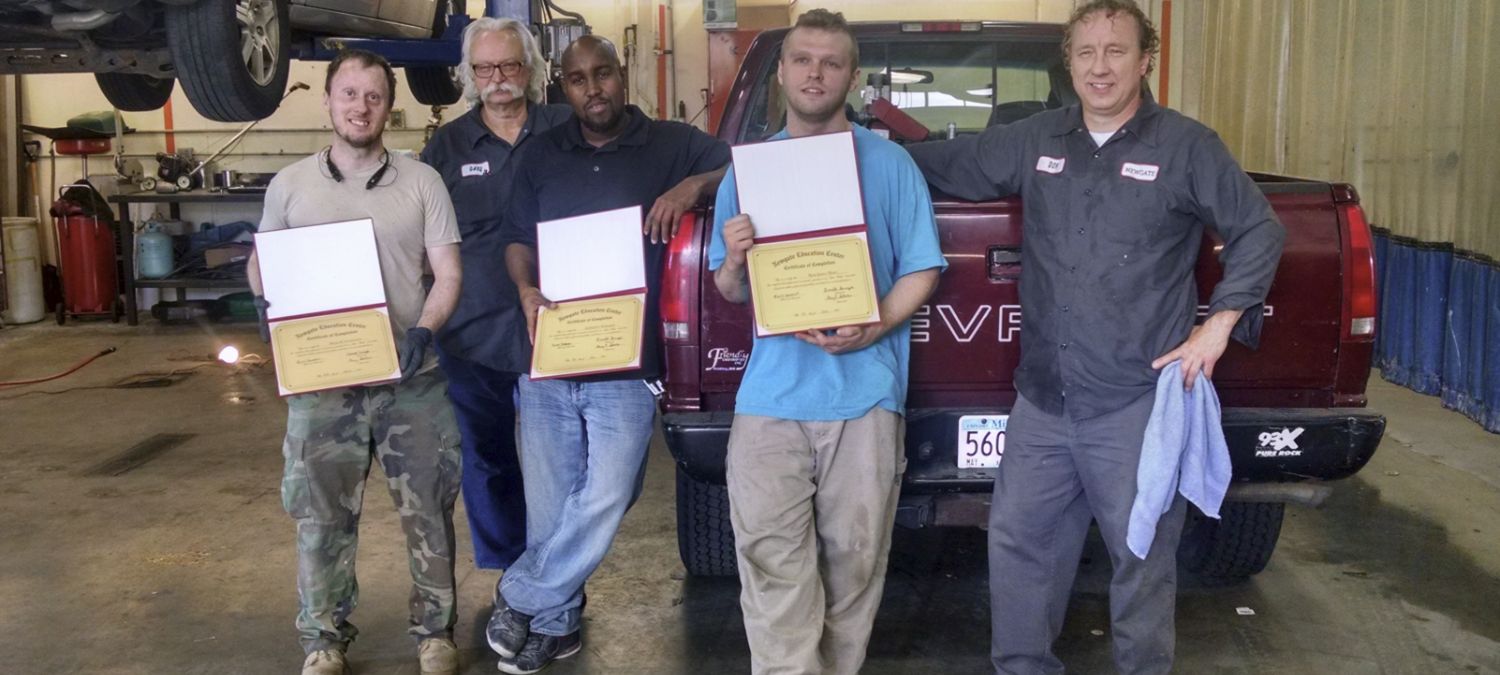
Here at Newgate School, we offer a third option that skips the cost question entirely. We're a nonprofit auto mechanics school in Northeast Minneapolis, and we train young adults for car careers without charging a dime in tuition or fees. Every lesson takes place in our shop, working on donated cars under instructors who have spent years turning wrenches for a living. Students get their hands on dozens of real projects before they graduate, usually within 12 to 18 months. Nearly all of them have a job lined up with a local shop or dealership by the time they finish. If you're weighing your training options and worried about debt, we'd love to show you around. Give us a call to set up a visit and meet an instructor.